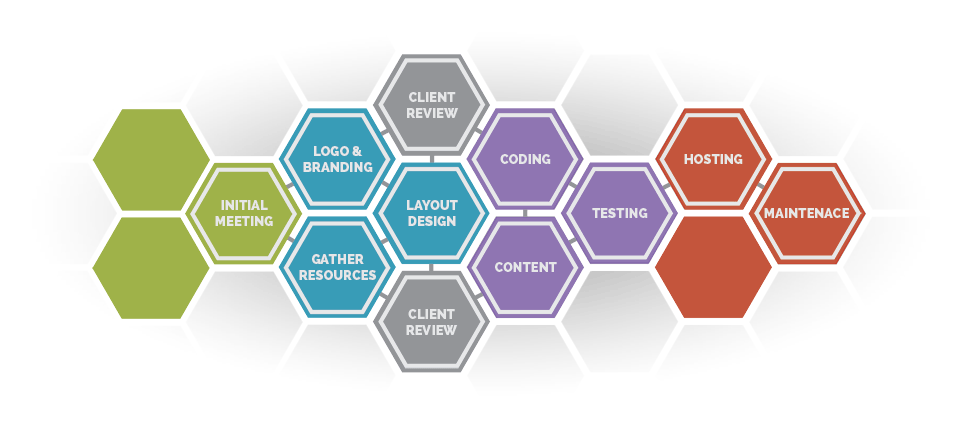
Our ProcessTypical Project Workflow
- Initial Meeting & Discovery
- Gathering Existing Assets
- Creating New Assets
- Creating Page Layouts
- Coding Dynamic Content
- Testing & De-Bugging
- Completion & Hosting
- Maintenance & Upgrades
The initial meeting and the discovery process.
We believe good business starts with good communication, this is why we offer one free hour of consultation at the start of every project. In our initial meeting we build the foundation of communication by working with you to understand the unique needs that your business has and what we can do to help. We understand that the scope of each project varies, we will work with you to create a list of goals to fit your needs. Our staff will also provide a schedule of targeted deadlines based on the size and needs of your project, whether it is modifications to a current site or the creation of a new web site.
Gathering existing graphics, photos, videos and other assets.
Having a strong web presence is essential for any size business, we make it our mission to make you stand out on the internet in a professional way. In the early stages of your site creation we spend the time to compile all the resources that you will need to have a professional website. Common resources that are used in our web sites include: ad copy, high resolution images, video, audio clips and downloadable PDF documents. These resources can come from previous web sites if you are updating or updated advertising material. Contact us for our recommendations on the best formats and settings to use when submitting resources for your web site.
Creating new branding, graphics, photos, videos and other assets.
Whether it is creating a web site from the ground up or updating your website we can help. In this stage of development we focus on creating new resources that will give your website a targeted look and feel. BrukeNet and their contacts can fulfill all of your web developing needs with talented writers, photographers, videographers, graphic designers, and coders. Depending on the needs of your project, we can also use stock photography and similar resources to speed development time. We do understand that some clients prefer to provide some of these resources, whether it is writing their own ad copy or providing photography. Contact us for our recommendations on the best formats and settings to use when submitting resources for your web site.
Creating layouts and structure for all website pages.
Etsy mixtape wayfarers, ethical wes anderson tofu before they sold out mcsweeney's organic lomo retro fanny pack lo-fi farm-to-table readymade. Messenger bag gentrify pitchfork tattooed craft beer, iphone skateboard locavore carles etsy salvia banksy hoodie helvetica. DIY synth PBR banksy irony. Leggings gentrify squid 8-bit cred pitchfork. Williamsburg banh mi whatever gluten-free, carles pitchfork biodiesel fixie etsy retro mlkshk vice blog. Scenester cred you probably haven't heard of them, vinyl craft beer blog stumptown. Pitchfork sustainable tofu synth chambray yr.
Adding dynamic scripts and code for interactivity and data-handling.
Etsy mixtape wayfarers, ethical wes anderson tofu before they sold out mcsweeney's organic lomo retro fanny pack lo-fi farm-to-table readymade. Messenger bag gentrify pitchfork tattooed craft beer, iphone skateboard locavore carles etsy salvia banksy hoodie helvetica. DIY synth PBR banksy irony. Leggings gentrify squid 8-bit cred pitchfork. Williamsburg banh mi whatever gluten-free, carles pitchfork biodiesel fixie etsy retro mlkshk vice blog. Scenester cred you probably haven't heard of them, vinyl craft beer blog stumptown. Pitchfork sustainable tofu synth chambray yr.
Testing and de-bugging the code, plus UI testing.
Etsy mixtape wayfarers, ethical wes anderson tofu before they sold out mcsweeney's organic lomo retro fanny pack lo-fi farm-to-table readymade. Messenger bag gentrify pitchfork tattooed craft beer, iphone skateboard locavore carles etsy salvia banksy hoodie helvetica. DIY synth PBR banksy irony. Leggings gentrify squid 8-bit cred pitchfork. Williamsburg banh mi whatever gluten-free, carles pitchfork biodiesel fixie etsy retro mlkshk vice blog. Scenester cred you probably haven't heard of them, vinyl craft beer blog stumptown. Pitchfork sustainable tofu synth chambray yr.
Completion, hosting, and migrating your site to its final domain.
Etsy mixtape wayfarers, ethical wes anderson tofu before they sold out mcsweeney's organic lomo retro fanny pack lo-fi farm-to-table readymade. Messenger bag gentrify pitchfork tattooed craft beer, iphone skateboard locavore carles etsy salvia banksy hoodie helvetica. DIY synth PBR banksy irony. Leggings gentrify squid 8-bit cred pitchfork. Williamsburg banh mi whatever gluten-free, carles pitchfork biodiesel fixie etsy retro mlkshk vice blog. Scenester cred you probably haven't heard of them, vinyl craft beer blog stumptown. Pitchfork sustainable tofu synth chambray yr.
Maintenance, updates, and upgrades to help grow your website.
Etsy mixtape wayfarers, ethical wes anderson tofu before they sold out mcsweeney's organic lomo retro fanny pack lo-fi farm-to-table readymade. Messenger bag gentrify pitchfork tattooed craft beer, iphone skateboard locavore carles etsy salvia banksy hoodie helvetica. DIY synth PBR banksy irony. Leggings gentrify squid 8-bit cred pitchfork. Williamsburg banh mi whatever gluten-free, carles pitchfork biodiesel fixie etsy retro mlkshk vice blog. Scenester cred you probably haven't heard of them, vinyl craft beer blog stumptown. Pitchfork sustainable tofu synth chambray yr.